
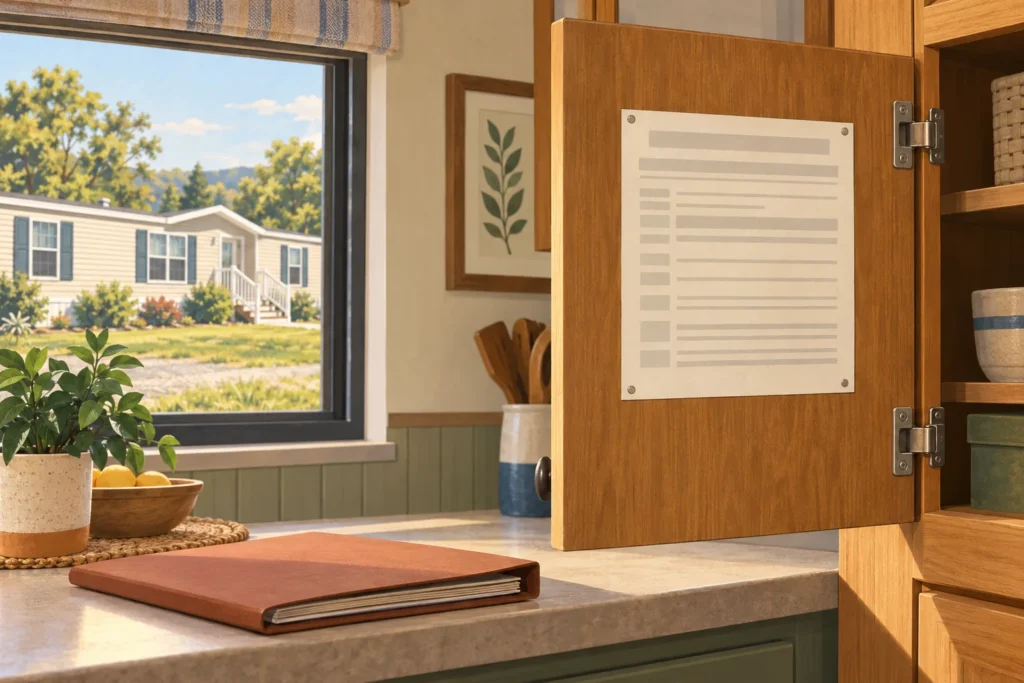
A manufactured home data plate is the interior record of the home’s factory identity and design information. Look in kitchen cabinets, bedroom closets, and near the main electrical panel. The small metal HUD tag outside is a separate record, so photograph both when you find them.
Start by deciding what you need to verify. A missing model number, an unreadable exterior tag, and an unknown roof load require different answers. Finding one document does not necessarily settle all three.
What a manufactured home data plate actually tells you
The name makes this record sound like a metal plaque. It is commonly a paper label, roughly the size of a letter sheet. Its useful information goes beyond the home’s name.
Use the plate to identify the factory, model, serial number, manufacturing date, and listed original equipment. It also carries design information and certification statements. The precise layout and wording can differ with the home’s manufacturing date.
Treat the plate as an original manufacturing record. It does not inspect today’s roof, establish the condition of hidden wiring, or approve later additions. Our mobile home basics guide explains how identity, installation, and present condition fit together.
Data plate, HUD tag, and serial number: keep them separate
| Item | Where to look | What to record | Common mistake |
|---|---|---|---|
| Interior data plate | Accessible interior location, often a cabinet or closet | Whole sheet, identity fields, design information, and listed label numbers | Photographing only the model name and missing the maps or second part of the sheet |
| Exterior HUD certification label | Permanent exterior surface of each transportable section | Every visible label number and the section where it appears | Finding one label on a home with several sections and assuming the search is complete |
| Home serial number | Data plate and a stamp in the foremost frame cross member | Complete characters, including any section suffixes | Submitting an appliance serial number or treating a tag number as the home serial |
A HUD label number uses a three letter agency designation followed by six digits. The prefix identifies the production inspection agency, not a state code you can reliably decode yourself. The serial number belongs in a separate field in your notes.
Do not assume two exterior tags must have consecutive numbers. Copy each actual number, including leading zeros. The interior record can help cross check those numbers without turning them into the home serial number.
For orientation, the exterior label is about 2 x 4 inches. The location rule places it near the taillight end of each section, with an approved visible alternative where necessary. An added porch or new siding can make a casual visual search inconclusive.
Find the interior record without damaging it
Bring a phone, flashlight, and a blank note. Search the easy interior locations before arranging any work beneath the home. Nothing in this search requires opening electrical equipment or removing a wall.
- Check kitchen cabinets. Look at the inside of doors and the cabinet walls. Move stored items only where you can do so safely.
- Look through bedroom closets. Inspect visible side and back walls. Check more than the main bedroom if the first search fails.
- Inspect the accessible area near the electrical panel. Read visible labels without removing screwed covers or exposing electrical parts. Stop if the location is damaged or unsafe.
- Note signs of previous remodeling. A replaced cabinet may have removed the old mounting surface. Record that possibility instead of assuming no plate ever existed.
Finding an appliance sticker does not complete the search. A water heater or furnace label describes that appliance. The home record identifies the manufactured home and can include a list of several factory appliances.
Leave a fragile sheet attached. Avoid scraping paint, applying solvents, peeling a corner, or using abrasive cleaners to reveal numbers. A partial readable original is more useful than a damaged sheet with its uncertain characters guessed later.
If paint or damage conceals the information, take a clear photograph of its present condition. Ask the manufacturer about a record copy before attempting restoration. During future mobile home remodeling, identify this sheet before anyone replaces cabinets or paints its surface.
Photograph a record you can actually use
Take one wider image showing where the plate is attached. Then take a straight photograph of the whole sheet and closer images of small fields. Review the pictures at full size before leaving the location.
Check that glare does not obscure the serial number or a checked box. Include map legends, notes, and the bottom edge. A cropped phone image can omit the one detail a reviewer needs.
Keep the original photos and make separate copies for annotations. In your note, type an uncertain character as uncertain rather than correcting it by eye. For example, write “third character may be 0 or O” beside the photo reference.
Record where and when each photo was taken. Use filenames that distinguish the interior plate, exterior label, and frame stamp. This is a practical filing method, not an official verification procedure.
Read the plate in the order your task needs
You do not have to decode every line before asking for help. Find the field relevant to your question, preserve its surrounding text, and explain the question clearly. Use the following reading order to avoid submitting the right number under the wrong name.
1. Manufacturing identity
Transcribe the plant name and address, model designation, serial number, and manufacture date together. The factory identity can be more useful than a broad brand name when requesting an archived record. Keep the date as printed instead of substituting a title year.
If a sales listing gives a different year, retain both records and ask for reconciliation. Do not overwrite the factory date on your worksheet. A disagreement is something to resolve, not evidence you should silently edit.
2. Original equipment
The listed appliance models describe major equipment installed at the factory. They are a starting point for tracing the home’s history. Compare them with the labels on equipment actually present before ordering a part.
A replacement furnace may have a different model from the plate. Photograph its own rating label and keep both records. Use the heating and cooling guide for the next equipment decision.
3. Wind, roof load, and thermal information
These categories answer different design questions. Keep each label and its units attached to the value you transcribe. A thermal designation cannot stand in for a wind designation merely because both use zone numbers.
The heating certificate may be combined with other information. It can describe the original heating design and its stated assumptions. Photograph the complete certificate rather than treating one temperature as a guarantee of current performance.
The comfort cooling certificate also needs its full wording. It may describe supplied equipment or the suitability of the air distribution system for central cooling. That distinction matters when someone assumes a factory document proves that a later air conditioner was correctly selected.
4. Accessory load statements
On a plate that contains an accessory load statement, read the checked choice and any stated limitations. Do not turn an affirmative statement into blanket permission to attach a deck, porch, or roof. The applicable design and installation instructions still matter.
Older records may not contain every field shown in today’s rule. Their absence alone is not a reliable way to declare an older home noncompliant. Ask the manufacturer or relevant authority about the requirements applicable to its actual manufacture date.
The current federal data plate requirements show the field categories and required statements. Use them to understand the record, rather than to recreate a missing official plate.
Make a section and document cross check
A useful manufactured home data plate file connects each number to its source. It also keeps unknown information visible. Do not combine everything into a single number labeled “HUD/VIN.”
| Field | Source to preserve | If it does not match |
|---|---|---|
| Home serial number, complete | Interior plate, available frame photo, and existing ownership record | List each version separately and flag the differing characters |
| Exterior label number for each section | Photo of each label and any corresponding list on the plate | Mark the section unknown; do not infer a missing number from its neighbor |
| Manufacture date and model | Factory record plus the document making a conflicting claim | Ask the issuing party or manufacturer to explain the discrepancy |
| Design field needed for the proposed work | Complete plate or applicable recovered certificate | Leave the project decision pending until the relevant information is established |
| Current appliance model | Rating label on equipment currently installed | Keep it distinct from the original equipment list |
For a home with several sections, make one worksheet row per visible exterior label. Describe the section with a simple reference, such as the kitchen side, and add a photo. This descriptive note does not establish an official section designation.
Suppose the interior list contains two tag numbers but you can read only one outside. That is an incomplete exterior observation, not permission to invent the second tag’s location or condition. Send the full plate and explain what remains unreadable.
If the data plate or HUD tags are missing
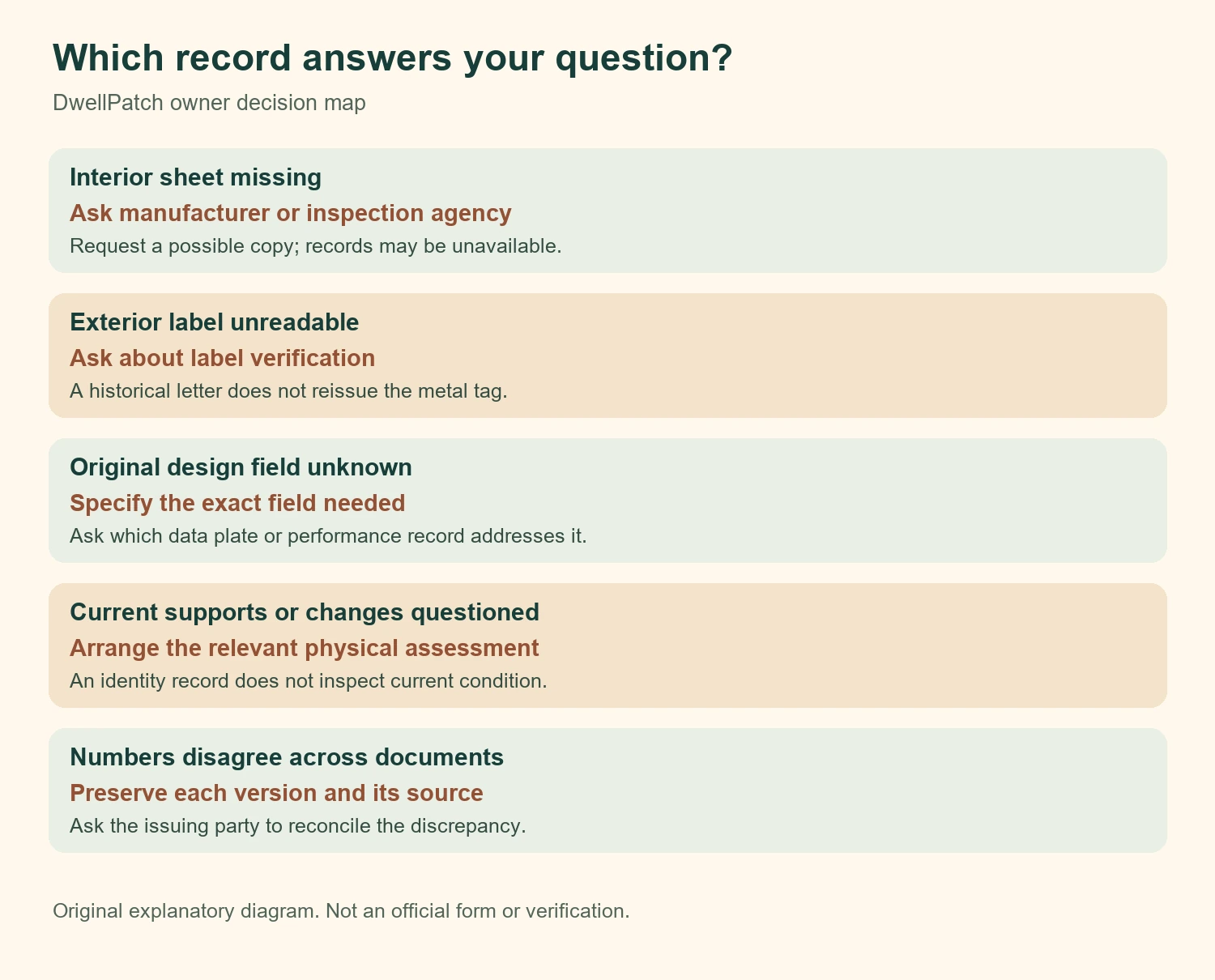
Ask whoever needs the record to identify the missing information in writing. “HUD certificate” is too vague to choose a service confidently. You need to know whether the request concerns label identity, original design information, or present foundation condition.
The interior plate is missing
Contact the manufacturer and the relevant production inspection agency about a possible copy. Provide the serial number and any surviving original documents. Recovery depends on available records; a recognizable floor plan does not establish the missing specifications.
An exterior label is missing or unreadable
HUD does not reissue the original metal labels. Its missing label and data plate guidance explains the historical verification route. A verification letter depends on finding the necessary records.
You need original design information
IBTS lists label verification and data plate or performance verification services separately on its manufactured housing page. Ask which product addresses your exact missing field. Do not assume that ordering a label letter also recovers every design value.
Confirm current availability, requirements, price, and delivery expectations directly before ordering. Do not build a move or repair deadline around an unconfirmed turnaround. If an old service link fails, start at the current manufactured housing page.
Both interior and exterior records are gone
Gather earlier financing paperwork, copies already held by the manufacturer, and any other existing home records. Separate original evidence from later transcriptions. Tell the record provider which identity details are established and which remain uncertain.
Ask a qualified person about locating the frame stamp if it cannot be read safely from an accessible position. The serial stamp belongs on the foremost cross member, not the removable hitch or drawbar. A missing hitch therefore does not answer whether the required frame stamp remains.
Do not crawl beneath unsafe supports, remove structural pieces, or grind the frame to search for characters. Request help locating and documenting the stamp. Keep any uncertain reading unresolved until it can be checked.
When the usual identification route does not fit
The home predates the federal program
The federal manufactured housing program began on June 15, 1976. Do not assume an older mobile home originally carried the later federal records. Start by establishing its actual construction date and ask the relevant state agency about the records for that home.
A missing modern label does not establish the construction date by itself. Preserve any older manufacturer sheet or state identification you find. Describe it accurately instead of renaming it a federal data plate.
The form asks for a VIN
HUD does not issue VIN numbers, and state use of the serial number as a VIN varies. Ask the agency receiving the form which identifier it needs. Do not add characters to make a home serial resemble an automobile VIN.
The home looks different from its old documents
New siding, a changed floor plan, and replacement appliances do not explain an identity discrepancy on their own. Keep the documented identity and the observed changes separate. Ask the manufacturer or responsible record holder to resolve the mismatch before treating a similar model’s specifications as yours.
What the plate cannot approve
A manufactured home data plate helps establish what the home was designed and identified as when manufactured. It is not a current condition report. A readable original record and a sound present installation are separate questions.
Before relocation, have the home’s design information checked against the destination requirements. A home should not be placed in a more restrictive wind, thermal, or roof load zone than its design. The separate moving a mobile home guide covers the larger planning process.
For an addition or heavy roof change, provide the relevant plate information to the person assessing the work. A zone label alone cannot calculate the effect of a specific new load. Start with our mobile home roof guide for the questions to assemble.
An inspection of supports also answers a different question from historical record verification. Keep any engineering report separate from label correspondence. Our foundation and underbelly guide explains that part of the home without treating paperwork as a condition assessment.
Send a focused request instead of a pile of photos
Use a short cover note with the original images attached. This example is an owner communication aid, not an official application:
I need to establish the original roof load information for this home. Attached are the full interior record, readable exterior label photos, and the serial number as recorded. One exterior label is unreadable; please confirm what record you need and whether your service can verify the missing design field.
Replace the question with your actual purpose. Include the manufacture date, manufacturer, and model when established, plus the complete serial number. Describe missing evidence explicitly and ask what additional documentation is needed before paying for a service.
Save the response with the question you sent. When someone later asks for “the plate,” you can show the original photos, the exact missing field, and any recovered documentation. That is a more useful home record than a guessed number copied into several forms.
Found a detail that needs checking? Tell us about a correction.