

A mobile home maintenance checklist works best when it separates things to check from things to replace. Use monthly reminders for alarms, filters and visible leaks. Add seasonal exterior checks, equipment service dates and extra checks after storms or repairs.
The tables below are a starting schedule for owner observation. Your home manual, equipment instructions and installer followup requirements supply the actual service intervals. A reminder to inspect a roof or foundation is not an instruction to coat the roof or adjust the supports.
Build your mobile home maintenance checklist around actual conditions
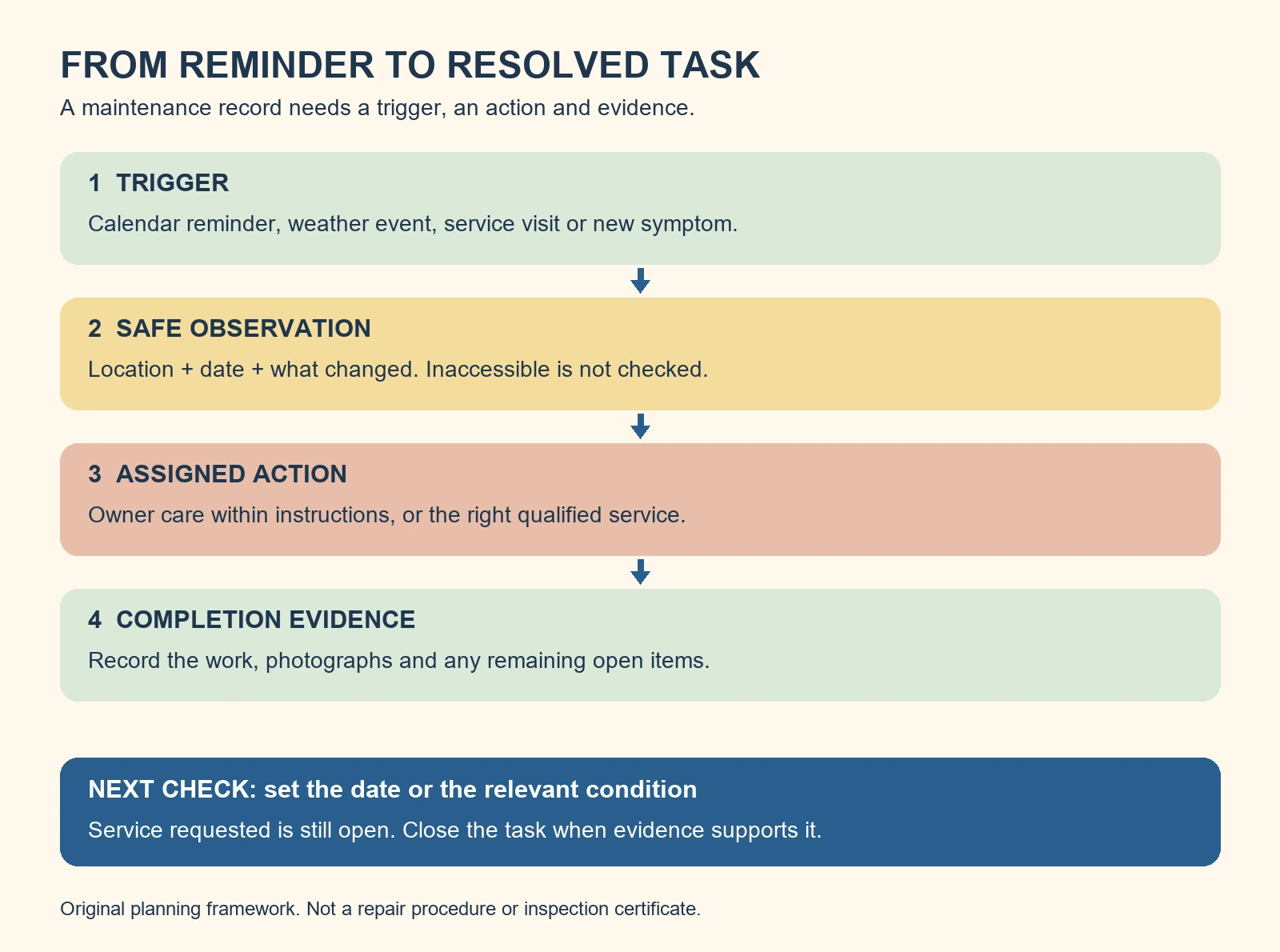
Give each task five fields: the location, the trigger, the observation, the next action and the completion evidence. That turns a vague reminder such as “check plumbing” into something you can finish and compare later.
For example, your entry might say “kitchen sink cabinet, monthly, look for fresh moisture, arrange repair if wet, save a dated photo.” Leave space for “not checked” and “not applicable.” Neither means the same thing as “checked and satisfactory.”
| When | Owner check or action | What changes the schedule |
|---|---|---|
| During normal use | Notice new leaks, unusual smells, damaged cords and changing appliance performance. Keep exits and service access clear. | A new symptom starts an action now; it does not wait for the calendar. |
| Each dryer load | Clean the lint screen before or after the load, following the appliance instructions. | Longer drying or poor exhaust calls for prompt investigation of the whole exhaust route. |
| Monthly | Test smoke and carbon monoxide alarms. Check the accessible HVAC filter and look at visible plumbing and wet areas. | Follow the alarm instructions and the equipment’s filter requirements. Heavy use or dust may require earlier filter attention. |
| At a seasonal change | Review exterior drainage, visible roof condition, skirting, doors, windows and upcoming weather needs. | Use local rain, freeze, heat and storm seasons rather than copying someone else’s month names. |
| Before heavy heating or cooling use | Arrange the appropriate equipment service. Review return air paths, accessible filters and any unresolved comfort problems. | The equipment manual and service provider determine the work and timing for your system. |
| At the annual records review | Check that required services happened. Review roof, support and anchorage concerns, alarm ages, repairs and next year’s tasks. | Inspection findings determine repairs. A calendar alone does not justify replacing components. |
| After a storm, leak or service visit | Check the affected areas when access is safe. Compare photographs, document changes and confirm that disturbed closures were restored. | Weather damage, active water or unsafe equipment takes priority over routine care. |
This is an organizing framework, not a home inspection certificate. A clean appearance cannot verify concealed wiring, roof layers, support loads or hidden moisture. Mark those areas for the right professional when you lack safe access or suitable evidence.
Start with a baseline you can compare next month
Gather the home’s owner manual, installation records, equipment model numbers and recent service invoices. Ask the manufacturer or retailer for the correct documents when they are missing. A manual from a similar looking home may describe different equipment or construction.
Photograph accessible areas from repeatable positions. Useful views include the ceiling below a known roof concern, the cabinet beneath each sink and each side of the home. Label locations clearly, such as “bedroom window facing driveway.”
Record existing stains separately from new moisture. A dated picture helps a contractor compare the change without guessing when it began. It cannot establish that a stain is dry inside the assembly.
Identify the water shutoff and keep its access usable. Use the water shutoff identification guide if the valve’s purpose is unclear. Don’t force a stuck valve during an emergency or assume an unfamiliar valve controls the entire home.
Make a short list of the qualified people you would call for plumbing, HVAC, electrical and manufactured home support concerns. Record the utility’s emergency instructions separately. This saves you from searching through invoices while an active problem worsens.
The monthly indoor circuit: alarms, water and airflow
Test alarms and keep the instructions beside the record
Test smoke alarms monthly using the test button and the manufacturer’s instructions. Record the result for each unit, rather than writing “alarms done.” The U.S. Fire Administration smoke alarm guide also explains battery care and replacement age.
Smoke alarms generally need replacement at ten years. Sealed batteries and replaceable batteries need different care, so check the actual model. Never remove a battery to silence an unwanted alarm.
Test carbon monoxide alarms monthly too, following their instructions. Record the unit’s replacement date from its label or manual; don’t apply the smoke alarm lifetime to it. If you suspect carbon monoxide poisoning, get outside immediately and call 911.
Look where small leaks can remain hidden
Open accessible sink cabinets and look for water on fittings, damp cabinet bottoms or a newly swollen edge. Check around the toilet, tub and shower after ordinary use. Report the location and whether moisture appears during filling, draining or while everything is idle.
A toilet that refills without being flushed deserves attention even if the floor is dry. Internal tank leakage differs from a leak onto the floor. Match any replacement part to the toilet’s actual mechanism rather than buying a generic kit first.
Review an unexplained water use increase. If your individual meter is safely accessible, compare its reading across two hours with no water use. A change suggests leakage, but automatic equipment or a shared supply can complicate the result.
Don’t open wall or floor coverings just to complete this check. For a problem beneath the home, use the plumbing system overview to organize the information for a repair visit. An inaccessible area should remain an open task.
Check the filter without inventing a replacement interval
Check an accessible HVAC filter monthly, particularly during heavy use. Turn the equipment off and use its owner instructions for safe filter access. Don’t remove service panels or reach into the blower to find a filter.
Keep a picture of the correct size, type and airflow orientation. Replace a disposable filter when its condition or specified interval calls for it. Clean a reusable filter only by the method its manufacturer permits.
A monthly check and a monthly replacement are different tasks. The general ENERGY STAR advice includes monthly checks and changes at least every three months. Record the requirements for your particular filter system instead of assuming one interval suits every design.
Keep furniture and stored items away from return grilles and supply registers. Record rooms with a new airflow change, along with thermostat settings and filter condition. The heating and cooling system guide explains why equipment, distribution and ventilation need separate attention.
Walk the exterior before the weather changes
Choose a dry, safe time for a walk around the home. Observe from the ground and compare your baseline pictures. A roof you cannot see clearly needs a qualified inspection, not a ladder trip merely to tick a box.
| Area | Useful observation | Next action when something changed |
|---|---|---|
| Roof and ceiling below | Visible missing roofing, lifted edges, displaced flashing or a new indoor stain. | Arrange assessment of the roof assembly and water entry. Don’t automatically apply coating over the symptom. |
| Gutters and discharge points, if present | Overflow marks, visible debris or water returning toward the home. | Arrange safe cleaning or drainage correction. Photograph actual flow during rain only from a safe location. |
| Windows, doors and siding | New gaps, damaged surfaces, failed seals or recurring wet areas. | Identify the assembly before choosing a repair. Preserve intended drainage openings. |
| Skirting and access panels | Loose panels, damaged screens, new openings or obstructed service access. | Restore the intended enclosure with suitable materials. Don’t change ventilation as a casual weather fix. |
| Ground and visible underside | Standing water, erosion, debris or a hanging bottom covering seen from safe access. | Arrange drainage or underfloor assessment. Don’t crawl beneath damaged supports or enter pooled water. |
| Entry steps and rails | A new wobble, loose rail or changing gap at the doorway. | Keep people away from an unsafe entry and arrange repair. Don’t brace an addition against the home without approved design. |
Roof care depends on what is actually installed. Asphalt shingles, metal panels, membranes and coated systems do not share one maintenance recipe. The roof identification and repair planning guide helps you prepare a useful inspection request.
Skirting, the bottom covering and a ground moisture sheet perform different jobs. A neat skirt doesn’t prove the insulation or bottom closure is intact. See the foundation and underbelly component map before describing the needed repair.
Preserve the ventilation arrangement designed for your enclosure. Don’t routinely close every vent for winter, or add vents everywhere because one checklist recommends it. Have an unfamiliar arrangement assessed before changing it.
Adapt your mobile home maintenance checklist to the climate
Before the wet or storm season
Review unresolved roof, siding and drainage concerns before expected severe weather. Check that earlier repairs have a written scope and completion record. A promise to “seal everything” is not a substitute for identifying the water path.
Keep movable yard items from obstructing access or striking the home. Arrange tree work where branches threaten the building or utilities. Don’t trim near electrical lines yourself.
For a recent water entry problem, ask what conditions will allow a meaningful followup check. Record that trigger as “after the next relevant rainfall,” rather than automatically closing the task when the invoice arrives.
Before the cooling season
Schedule service early enough to address findings before heavy use. Give the technician your notes about uneven temperatures, unusual noise or water near the equipment. Ask for the actual findings and completed work, not just a receipt labeled “tuneup.”
A professional maintenance visit may include condensate drainage, controls, coils and refrigerant checks. Those are not a homeowner checklist for opening equipment. Follow the manufacturer’s instructions for any permitted cleaning or clearance around an outdoor unit.
Before freezing weather
Review the home’s water supply entry and any vulnerable piping with a qualified person. If heat cable is present, identify its exact model and inspect it only as its instructions allow. Damaged cable or unknown wrapping needs assessment rather than improvised extra insulation.
Follow instructions for outdoor faucets, hoses and seasonal equipment. An extended absence needs a home specific winterization plan. Don’t assume a dripping faucet or a shutoff valve alone protects every pipe and appliance.
Arrange heating service before dependable heat becomes essential. Leave combustion air and exhaust routes unobstructed. Never cover an opening until you know its function.
During humid weather
Watch for persistent condensation and musty areas, especially after a leak or cooling problem. Indoor humidity below 60 percent, ideally 30 to 50 percent where possible, helps limit mold conditions. The EPA moisture guide explains source control and drying.
Act promptly on wet materials rather than waiting for the seasonal review. Drying within 24 to 48 hours after a leak can help prevent mold. That target doesn’t make contaminated floodwater, concealed damage or electrical hazards safe for owner cleanup.
Plan annual services without ordering unnecessary repairs
Use an annual review to reconcile the records: what was due, what was completed and what still needs attention. The interval for an actual inspection or service comes from the relevant instructions and circumstances. “Annual review” doesn’t mean every component must be replaced annually.
- Heating and cooling: Confirm the required service happened and that any recommended followup has an owner and date.
- Dryer exhaust: Confirm periodic duct and vent cleaning is scheduled for the installation and use. Include inaccessible sections in the service scope.
- Supports and anchorage: Review installation followup requirements and any movement, corrosion, erosion or storm concerns with a qualified manufactured home professional.
- Roof: Check inspection findings and the roofing manufacturer’s maintenance requirements. Resolve compatibility before authorizing coating or sealant.
- Appliances: Copy filter, cleaning and service tasks from each actual model’s manual, including water heaters and ventilation equipment.
- Alarms and protective devices: Review replacement dates and prescribed tests. Follow device instructions for accessible test buttons without removing electrical covers.
Do not schedule routine lifting or releveling simply because another home needed it. A sticking door can involve its hardware, moisture damage or structural movement. Record the symptom and arrange diagnosis before anyone changes the supports.
Likewise, don’t tighten straps or anchors as an annual household chore. The restraint system must suit the home’s installation design. Owner observation is useful evidence, but it doesn’t establish tension, capacity or structural adequacy.
Extra checks after storms, leaks and service visits
Wait for safe conditions and any required clearance before approaching a damaged home. Downed wires, shifted supports, floodwater and loose roofing need qualified response. A maintenance log doesn’t authorize reentry after a disaster.
From safe locations, compare roof edges, skirting, entry steps and indoor ceilings with earlier photographs. Record the event and the time you first noticed the change. Don’t climb onto a damaged roof or enter the underside to obtain a better picture.
After plumbing or duct work, ask the contractor to identify every disturbed area. Confirm that access closures, the bottom covering and any affected insulation were restored as part of the agreed scope. Save completion photographs where the work will become concealed.
After a leak repair, track two separate tasks: stopping the source and addressing the wet assembly. A dry floor surface doesn’t establish that hidden material is dry. Ask what evidence closes the drying and damage assessment.
After dryer service, confirm the exhaust is connected to the intended outdoor termination before use. Longer drying or poor exhaust can indicate blockage even after the lint screen is clean. The CPSC dryer safety alert explains that distinction and periodic cleaning.
Keep an action log, not a row of unexplained checkmarks
Copy this format into a notebook or calendar. Use one row per finding, with a second reminder for followup. Keep invoices and photographs under the same location name so the history stays searchable.
| Field | Example entry |
|---|---|
| Date and location | October 16, kitchen sink cabinet facing hallway. |
| Trigger and observation | Monthly check; fresh moisture below the drain after washing dishes. |
| Immediate response | Stop using the affected fixture and arrange assessment; keep the area accessible. |
| Assigned action | Plumber to identify the leak and assess affected cabinet or floor material. |
| Completion evidence | Repair description, dated photo and the agreed drying or damage followup. |
| Next check | After the repaired fixture returns to use, plus any followup specified by the contractor. |
For budgeting, separate recurring care, inspection charges and repairs found during inspection. Obtain written scopes for larger work. There is no useful universal maintenance cost without knowing the home’s condition, installed systems and local labor.
Keep “service requested” distinct from “service completed.” For an unresolved new home concern, save correspondence and the original report date. That record is more useful than repeatedly deleting and recreating the reminder.
Your mobile home maintenance checklist should become more specific as you learn the home. Carry forward unresolved findings and shorten inspection reminders where conditions warrant it. Close a task only when the observation, action and evidence tell the same story.
Found a detail that needs checking? Tell us about a correction.