

A mobile home wall has two identities: the surface you decorate and the assembly holding it in place. A patterned face may cover gypsum, wood based paneling or another substrate. Identify both before choosing a patch, paint system or replacement panel.
VOG means vinyl over gypsum. It is gypsum wallboard with a decorative facing, not proof that the entire wall is plastic. Painted drywall and other factory finished panels also occur in manufactured homes.
Start with the home’s records and the condition of the material. A sound wall with an unwanted pattern presents a different project from a soft panel beneath a leaking window. The same distinction matters overhead when repairing mobile home ceilings.
Identify your mobile home wall without damaging it
Check the owner’s manual, original specifications, repair invoices and any spare panels left with the home. Contact the building plant with the model, serial number and clear room photographs. Ask for the wallboard product, face material and recommended care instructions.
A manufacturer’s answer tied to your home is stronger evidence than a photograph of a similar floor plan. Previous owners may have replaced one room or covered the original finish. Record findings by room rather than assigning one material to the whole house.
Look at existing visible damage or an already exposed, safe edge without cutting or peeling anything. A layered wood edge differs from a chalky gypsum core. However, paint, compound and decorative films can obscure the identity.
Do not remove electrical devices or reach into their openings to inspect the wall. Do not create a test hole in an unknown finish. Neither a tapping sound nor a shiny surface establishes the material or what is behind it.
| Possible surface | What the name tells you | What still needs confirmation |
|---|---|---|
| VOG panel | Vinyl is applied over gypsum wallboard. | Exact facing, thickness, attachment and compatible finish system. |
| POG panel | Paper on gypsum is a facing description used in housing literature. | Whether the paper is decorated, coated or already painted; care instructions vary. |
| Painted or textured drywall | A finished gypsum surface may have concealed taped joints. | Existing coating, damage depth and whether repairs match the original assembly. |
| Wood based decorative panel | The substrate may be plywood, hardboard or another manufactured wood product. | Actual product identity; an imitation grain pattern does not prove solid wood. |
| Added bathroom or accent panel | A later surface may cover a separate backing. | Backing condition, intended exposure and the whole installation system. |
Keep an unknown material marked unknown until someone can identify it. Buying a patch kit first does not solve that uncertainty. Avoid stripping a factory facing because it resembles removable wallpaper.
Separate the face, panel, joint and hidden assembly
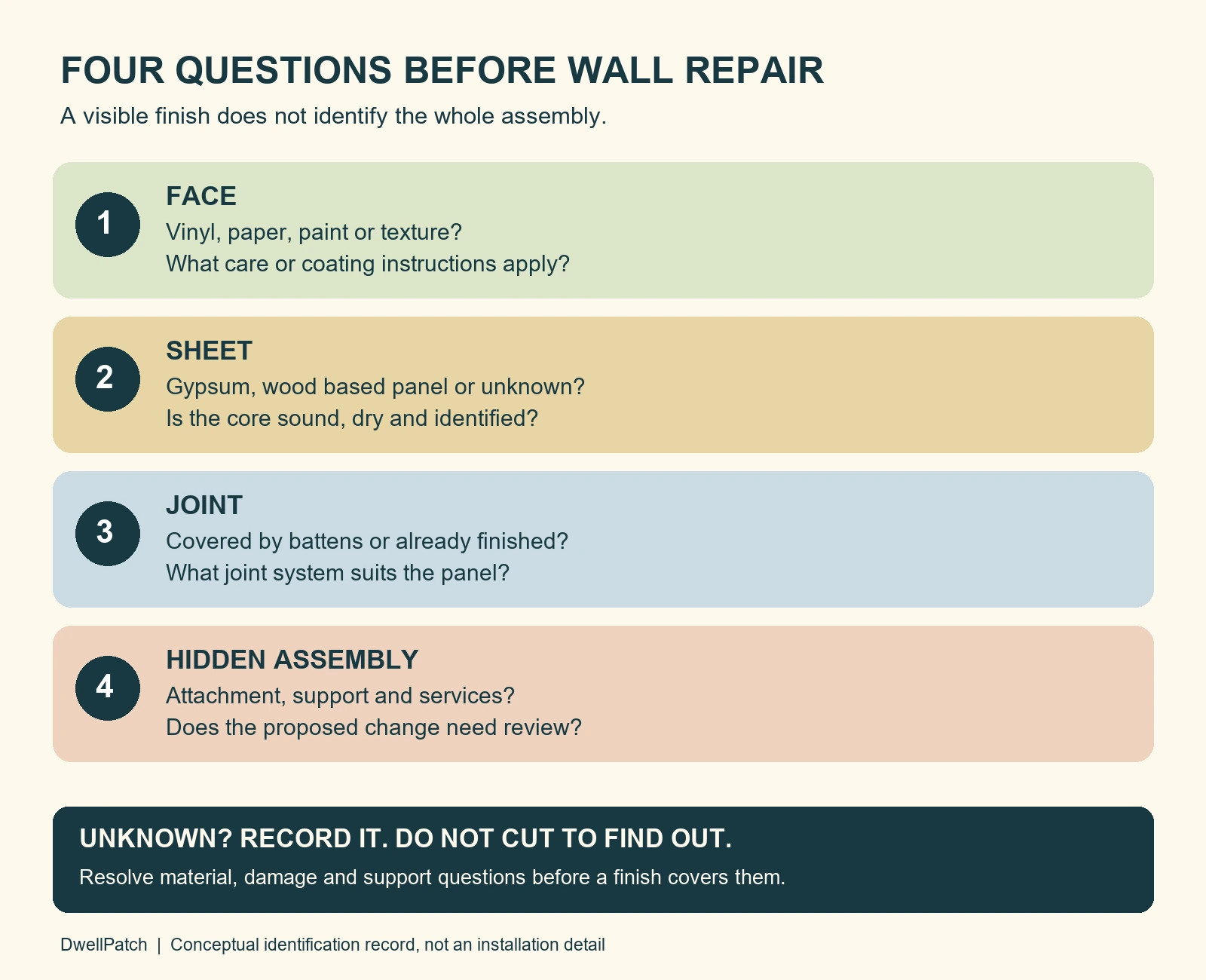
The face is the visible film, paper, paint or texture. The panel is the sheet beneath it. A repair can restore one while leaving another damaged.
For example, a scratch through a decorative face may leave the core sound. A soft or crumbling core is a different defect. Painting both marks the same color would hide the distinction without resolving it.
Battens are the narrow strips covering many panel joints. They conceal the joint and form part of the visible finish. A batten does not tell you the wall’s stud spacing or whether the wall carries structural loads.
Behind the finish are framing, connections and sometimes services or insulation. Some manufactured housing gypsum products belong to tested shear wall or ceiling diaphragm assemblies. That means the sheets and their attachment can have a role beyond decoration.
The USG manufactured housing gypsum submittal illustrates these product and assembly distinctions. It documents several thicknesses and specific applications. Its specifications do not identify your existing wall or authorize a substitute.
There is no useful universal answer to how thick a mobile home wall is. Panel thickness, stud depth and total finished wall thickness describe different measurements. The correct figure depends on what you need to replace or attach.
Use the same approach as other manufactured home compatibility checks: identify the existing assembly and the replacement’s requirements. A store label saying mobile home does not establish a match. Neither does a home age estimate.
Sort cosmetic damage from a problem behind the finish
Photograph each affected area before covering it. Include a room view, a closer view and the nearest window, fixture or ceiling joint. Record whether the mark changes after rain, bathing or plumbing use.
Describe what you can observe rather than writing a diagnosis. A brown stain is an observation. Roof failure, condensation and a leaking pipe are possible explanations that require investigation.
| Observation | Decision before decorating | Useful record |
|---|---|---|
| Small dry scrape on an otherwise firm panel | Identify the facing and an approved cosmetic repair. | Close photograph, finish name and repair product instructions. |
| Softness, swelling, loose facing or recurring staining | Arrange moisture and material assessment before patching. | Location, weather or fixture timing, previous leak repairs. |
| New cracks with doors sticking or floors changing | Have support and movement assessed before concealing joints. | Dated photographs and changes elsewhere in the home. |
| Sagging ceiling or loose overhead material | Keep clear and arrange assessment of the panel and support. | Photographs from a safe position; no pushing or exploratory removal. |
| Unknown older texture or coating that work would disturb | Resolve hazardous material questions before sanding or cutting. | Home age, renovation history and any actual test reports. |
A stain near a window needs a source investigation, not just stain blocking paint. The guide to a leaking mobile home window separates useful observations from assumed seal failures. Keep those findings with the interior repair quote.
Moisture can also come from plumbing or indoor conditions. A wall beside a bath is not proof that shower splash caused the damage. Document when the area becomes wet and have the source checked.
Do not paint or caulk over mold. Correct the moisture problem and arrange suitable cleanup and drying before finishing. Porous materials may need replacement, depending on their condition and the extent of contamination.
Do not assume a dry surface proves the whole cavity is ready to close. Ask the repairer how the affected assembly was assessed. Keep the explanation, photographs and any measured results with the job record.
Choose between keeping, refinishing, patching and replacing
These are four different scopes. Compare them after identifying the material and resolving damage. A replacement quote should not be the default answer to a pattern you dislike.
Keep the panel and its battens
This can suit a firm, dry panel with an intact finish. Follow its care instructions and consider changes around it, such as furnishings or approved trim work. Keeping a sound surface avoids turning a decorating preference into a wall assembly project.
If repainting is permitted for the actual surface, retaining battens avoids creating a new exposed seam treatment. It does not guarantee coating adhesion. Panel faces and battens may be different materials that need different preparation.
Refinish a verified, sound surface
Get the wall manufacturer’s position before selecting a paint system. Some home care instructions discourage painting prefinished surfaces. General advice about bonding primer cannot override those instructions.
Ask the coating supplier to confirm compatibility with the exact facing and existing coating. Discuss cleaning, primer, finish, drying conditions and a small trial area. Follow the selected system’s instructions rather than combining unrelated online recipes.
A trial helps reveal appearance or adhesion problems in that location. It cannot establish structural adequacy, hidden dryness or the condition of the whole room. It also does not replace any needed hazardous material assessment.
Repair limited damage
A small surface repair and a panel patch require different information. Establish whether only the face is damaged or the sheet needs repair. Ask how the repair will attach, meet existing thickness and accept the intended finish.
A smooth patch may remain noticeable beside a patterned or textured face. Decide whether a visible repair is acceptable before agreeing to the work. An accent finish might address appearance, but it cannot repair a weakened substrate.
Replace a damaged panel or change the system
Replacement may be necessary when a panel cannot be restored to a sound condition. The scope must also address its attachment, backing and any damaged material behind it. Matching the visible pattern is only one part of that decision.
For a larger change, have the installer document what is removed, what remains and what is added. Include panel type, weight, thickness and attachment requirements. Check the home’s design and the authority’s alteration requirements before work starts.
Removing battens changes more than the appearance
Removing a joint cover exposes the condition and geometry beneath it. The edges may not be ready for a conventional taped finish. Damage to a decorative facing during removal can also enlarge the repair area.
Choose the desired joint treatment before stripping a room. Ask the finisher to explain compatibility with the existing panel face and attachment. Caulk, joint compound and a covered joint are not interchangeable systems.
A promise that flexible filler will never crack is not a substitute for assessing movement. Repeated cracks, loose sheets and changing door fit call for a broader investigation. Conversely, an isolated old hairline mark does not prove a foundation failure.
Include the final appearance in the quote: visible strips, flat painted joints or a specified texture. View an agreed sample under the room’s actual lighting. A different sheen or texture can make a repaired band more noticeable.
Wallpaper also needs a compatible, sound surface. Do not assume a new covering will bridge loose joints, hide raised strips or stabilize peeling material. Ask how later removal would affect the face beneath it.
Overlays need a whole assembly check
Covering an existing wall adds material instead of removing it. That changes weight, finished thickness and the relationship to trim, openings and electrical devices. Thin material is still added material.
Have the installer explain where the new layer attaches and what supports it. Do not assume the old decorative sheet can carry a new heavy finish. Tile, stone, cabinets and shelving need their own verified support arrangements.
Outlet and switch locations need review when wall depth changes. An electrician should resolve the box and device installation requirements. Do not use a longer screw as a universal solution or bury service access behind a new finish.
Door trim and window returns may also need changes. Keep those finish details separate from structural opening alterations. Our door frame guide explains why the frame and surrounding opening need distinct checks.
A decorative wall panel is not automatically a shower backing or waterproofing system. Confirm the approved exposure and complete installation requirements for a wet area. Coordinate that decision with the fixture and bathroom project plan.
Existing exterior walls may have moisture control layers that a finish change affects. Ask how the replacement preserves the intended assembly. Do not add a generic plastic sheet behind every wall or strip every existing facing.
Ceiling repairs need a separate decision
A mobile home ceiling is not simply a wall turned sideways. The panel’s attachment and the roof structure supporting it must suit the replacement. Overhead work also creates a falling material risk.
Keep people clear of a sagging or loose area. Arrange prompt assessment rather than pushing the ceiling back into position. A decorative cover does not establish that damaged material is safe to leave overhead.
Before specifying a replacement, record the existing ceiling type and available home documents. Ask the contractor to verify roof framing, attachment and any design role of the ceiling. Water damage may extend beyond the visible mark.
Choose a replacement based on those findings. A product marketed as lightweight does not prove that an existing roof assembly can support it. A suspended grid also needs a compatible, verified support system.
Keep electrical fixtures, ventilation openings and required service access in the scope. Have qualified trades coordinate changes before the ceiling closes. Do not hang a light or fan from a finish panel merely because it appears firm.
Check hazards and alteration rules before opening surfaces
Older paint, texture, joint material or another concealed layer may require assessment before disturbance. Appearance cannot establish whether asbestos is present. Do not scrape, sand, drill or make your own sample from a suspect material.
Homes built before 1978 may contain lead paint. Have the planned disturbance assessed and use appropriate lead safe work practices and qualified help. A newer visible finish does not establish the age of everything underneath.
The EPA remodeling guidance covers underlying damage, lead and asbestos precautions together. Resolve those issues before trying a sanding or removal technique. Keep hazardous material reports with the work order.
Ask the state or local manufactured housing authority what your specific alteration requires. Painting, repairing a small defect and replacing a wall assembly are different scopes. Requirements vary by jurisdiction and the work proposed.
For example, Washington requires an alteration permit for installing drywall on walls and ceilings. Its guidance also addresses plan review. That is a Washington example, not a nationwide permit rule.
A mobile home wall that looks like a simple partition may still need design review before removal or alteration. Identify the home’s structure and hidden services through qualified assessment. This guide does not authorize removing walls or enlarging openings.
Give a repairer a scope they can actually price
Separate the cause repair, mobile home wall repair and final appearance in the written quote. Otherwise, one bid may include a full panel replacement while another includes only paint. A room price cannot explain that difference.
- Identity: Home model, serial number, room, known panel and finish, plus anything still unidentified.
- Condition: Dated photographs, symptoms, leak history and the evidence used to assess moisture or movement.
- Scope: Keep, refinish, patch, replace or overlay; name the included walls and ceiling areas.
- Assembly: Replacement specifications, attachment, support review, services and inspection stages before closure.
- Appearance: Batten treatment, texture, color, sheen, sample approval and the acceptable extent of a visible repair.
- Completion: Who obtains approvals, arranges inspections, removes waste and supplies maintenance instructions.
Ask what happens if opening an approved repair area reveals more damage. Require a description and revised agreement before the scope expands. Keep photographs of completed concealed work where the contractor can safely provide them.
Your final record should identify the materials installed and how to maintain them. Save leftover labeled finish material when appropriate. The next repair becomes easier when the wall’s identity no longer depends on a guess.
Found a detail that needs checking? Tell us about a correction.